

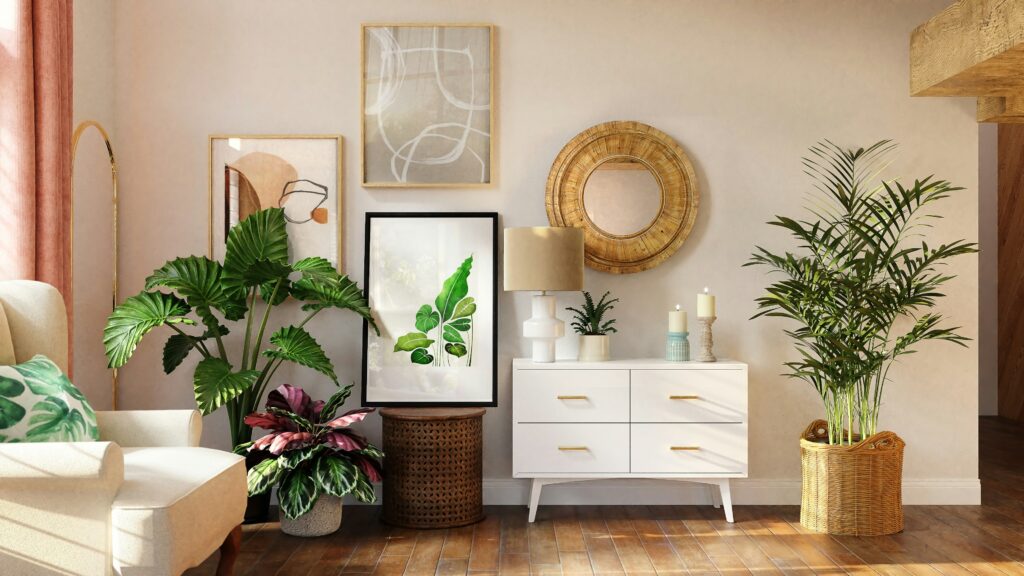
There is a reason a room with plants, wood, and daylight instantly feels better to sit in. We are wired to respond to nature, and homes that ignore that tend to feel flat no matter how expensive the furniture is. That simple idea is the foundation of biophilic interior design India homeowners are embracing in 2026, and it has quickly become one of the most talked about approaches in modern home design. It is not about filling your flat with pots. It is about designing so that light, air, texture, and greenery all work together. At Imperium Spaces, we build this thinking into homes across the city, and here is how you can too.

What Biophilic Design Actually Means
Biophilic design is the practice of connecting indoor spaces with the natural world. It works on three levels: bringing nature directly into the home through plants and water, using natural materials and patterns that echo nature, and shaping spaces the way natural environments feel, with light, openness, and shelter. The purpose is practical rather than decorative, since spaces designed this way are shown to feel calmer and more comfortable to live in. For Indian homes, where light and ventilation already matter enormously, it fits naturally.
Why Biophilic Interior Design India Is Growing in 2026
The rise is driven by how people live now. Urban flats are getting more compact and more enclosed, while hybrid work means many of us spend far more hours indoors than we used to. At the same time, homeowners have shifted their priority from how a home photographs to how it feels to live in, with wellbeing becoming the real measure of good design. Natural materials and nature-led spaces answer both concerns at once. That combination is why this approach has moved from a design term to something clients now ask for by name.
Key Elements of Biophilic Interior Design
You can apply this in any home, large or small. These are the elements that make the biggest difference.
Step 1: Maximise Natural Light
Daylight is the single most powerful biophilic element. Keep window treatments light and sheer, avoid blocking windows with tall furniture, and use light, reflective surfaces to carry daylight deeper into the room. Mirrors placed opposite windows help enormously in flats where only one side gets good light.
Step 2: Add Plants Thoughtfully
Greenery is the most obvious element, but placement matters more than quantity. A tall plant in a corner, trailing greens on a shelf, and a small cluster near a window do more than plants scattered everywhere. Choose low-maintenance varieties suited to your light levels, since a thriving plant lifts a room and a struggling one does the opposite.
Step 3: Use Natural Materials and Textures
Wood, cane, rattan, stone, jute, cotton, and linen all carry the feel of nature indoors. Cane-front cabinets, a wooden dining table, a jute rug, or a stone counter add warmth and tactile interest that painted surfaces cannot. These materials also age beautifully, which suits the lived-in quality this style aims for.
Step 4: Bring in Natural Colours and Patterns
Earthy greens, warm browns, sand, clay, and soft stone tones all echo the outdoors. Organic shapes and curved furniture feel gentler than sharp geometry and mirror how forms appear in nature. This palette overlaps closely with warm minimalism interior design, which is why the two styles work so well together.
Step 5: Improve Airflow and Ventilation
Fresh air is as much a part of this as greenery. Keep cross ventilation paths clear, avoid crowding balconies and window areas, and use ceiling fans to keep air moving. Good airflow makes a home feel fresher and cooler, which matters a great deal in Indian conditions.
Biophilic Ideas for Compact Indian Homes
Small flats can absolutely do this, they just need smarter choices. Go vertical with wall-mounted planters and hanging greens to save floor space. Use the balcony as a green extension of the living room rather than storage. Choose one statement plant instead of many small ones so the room stays uncluttered. Pick furniture in natural materials so the greenery is supported by the whole room rather than doing all the work alone. These ideas pair directly with the principles in our small space interior design guide.
Room by Room Biophilic Touches
Each space suits a different approach. In the living room, a large plant near the window and natural textures in rugs and cushions set the tone, building on the ideas in our living room interior design in Bangalore guide. In the bedroom, keep it simple with one air-purifying plant, linen bedding, and warm wooden tones. In the kitchen, a small herb setup on the windowsill is both useful and green. In a work-from-home corner, a plant within eyeline genuinely helps the space feel less enclosed during long hours.
Mistakes to Avoid
A few errors are common. Buying plants that do not suit your light levels leads to dying greenery, which undermines the whole effect, so match the plant to the room. Overcrowding a small space with pots creates clutter rather than calm. Relying on artificial plants misses most of the benefit, since the air quality and texture are part of the point. Blocking your windows with tall furniture cancels out your best natural asset. For current inspiration on nature-led interiors, publications like Architectural Digest India cover this style well.
How Imperium Spaces Designs Nature-Led Homes
At Imperium Spaces, we plan light, ventilation, and natural materials into the layout from the very first design stage rather than adding greenery at the end. Because we handle design, manufacturing, and installation in-house, we can build cabinetry and storage in finishes that carry this natural feel throughout the home. If you are planning a full project, our guide to complete home interior design in Bangalore covers every stage, and you can browse our completed projects to see how these ideas look in real homes.
Final Thoughts on Biophilic Interior Design
Bringing nature indoors is one of the simplest ways to make a home feel genuinely better to live in. Good biophilic interior design India homeowners can actually apply comes down to maximising daylight, adding greenery thoughtfully, choosing natural materials, using earthy colours, and keeping air moving. None of it requires a big budget, only good planning. If you would like a home designed around light, air, and natural warmth, book a free consultation with Imperium Spaces and we will bring it to life.